

The Spectacled Bear: What Happens When the Forest Looks Back at You
The Spectacled Bear is the only native bear in South America — and it lives in the mountains of Guasca, Colombia. Discover what really happens when you encounter one in the Andean cloud forest.
Reserva Natural El Páramo
5/8/20264 min read
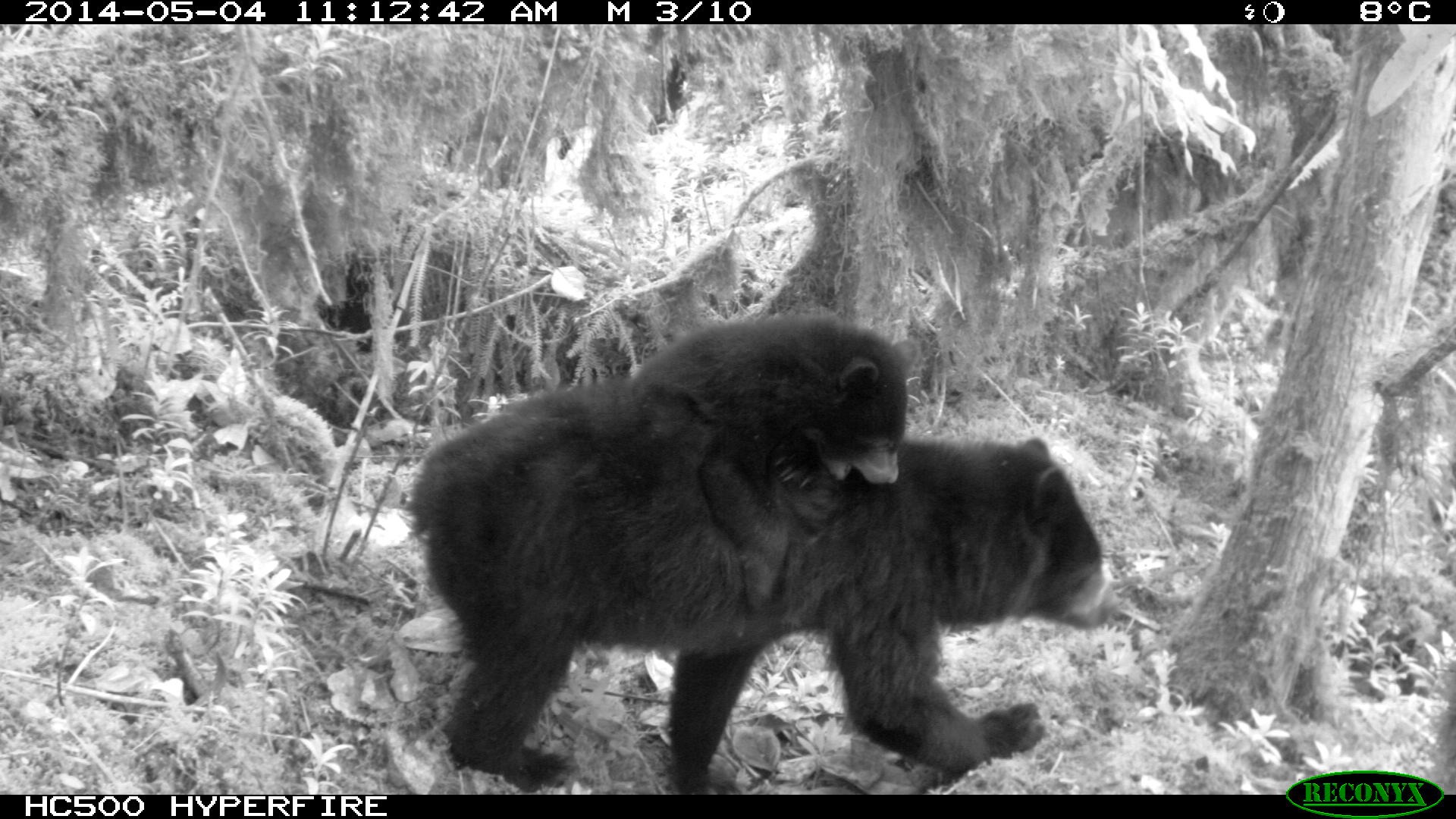
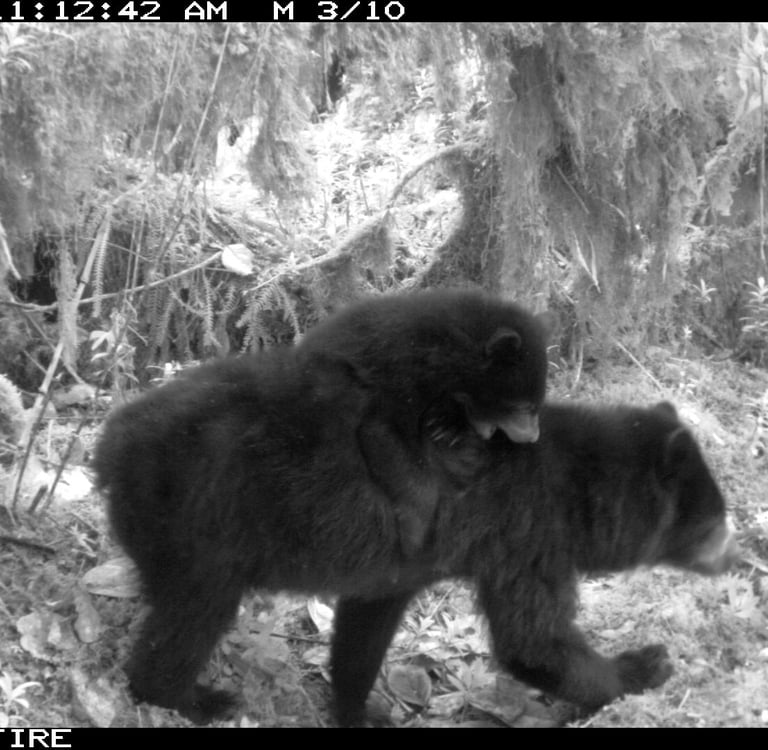
There is a moment that visitors to Reserva Natural El Páramo rarely forget. It's not the sunrise breaking through the fog, nor the first sip of hot chocolate after a cold trail. It's that quiet instant — almost breathless — when a fresh track in the mud, wide and deep with five distinct toes, reminds you that you are not alone in this forest. And that whoever shares it with you carries a story far older than your own.
The Andean Bear, also known as the Spectacled Bear (Tremarctos ornatus), is the only native bear in South America. And El Páramo, in the mountains of Guasca just over an hour from Bogotá, is one of the few places in Colombia where its presence is not a rumor or an old archive photograph — it is an active reality, monitored and protected for more than twenty-five years.
The Guardian Nobody Sees — But That Holds Everything Together
The Andean Bear did not choose the páramo and Andean cloud forests by accident. This species, classified as Vulnerable to extinction by the IUCN, depends directly on ecosystems like Colombia's Eastern Cordillera: high-humidity zones dense with frailejones, bromeliads, and a diversity of wild fruits that the bear consumes with an almost deliberate precision. It eats what the forest offers. And in doing so, it disperses seeds across territories that would otherwise have no one to plant them.
Ecologically, the Spectacled Bear is what scientists call an umbrella species: protecting it means protecting the entire ecosystem it inhabits. Every hectare of Andean cloud forest conserved for the bear also conserves the water resources that feed streams, rivers, and ultimately the water supply for millions of households across the Bogotá savanna.
That is not metaphor. That is hydrology.
Seeing a Bear at El Páramo: What Actually Happens
Visitors who arrive expecting a safari experience do not find what they are looking for — and that, in truth, is good news.
The Andean Bear is a solitary animal, primarily nocturnal and crepuscular in its habits, and has spent millions of years of evolution perfecting its elusiveness. It does not pose. It does not wait. It leaves before you arrive, but it leaves its signature on the territory — a scraped tree trunk, a shifted rock, that print in the mud — so that whoever knows how to read the forest understands it was there.
Guided tours at the reserve include training in reading these signs: tracks, dens, claw marks on trees, and footage from strategically positioned camera traps along the trails. Orlando Feliciano, wildlife veterinarian and founder of the reserve, has spent decades learning to speak that language.
"People come looking to see the bear," says Orlando as he reviews footage from a camera trap installed in the northern sector of the forest. "What they find, if they pay attention, is something more valuable: they begin to understand how it thinks, how it moves, why it matters. No documentary teaches you that."
That is the shift that sets an experience at El Páramo apart from any other ecotourism activity in Cundinamarca: it is not about seeing the bear — it is about understanding the world from which the bear is watching you.
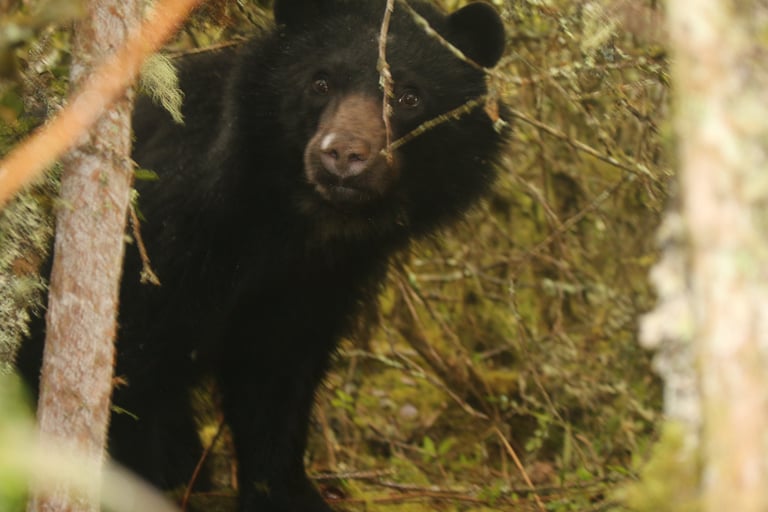
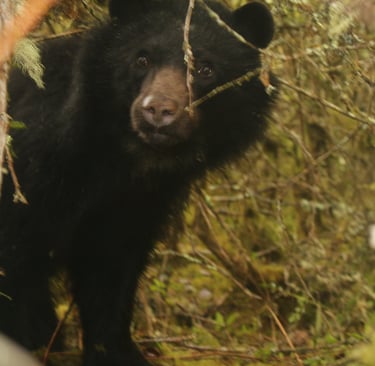
Photo: Orlando Feliciano
Photo: Orlando Feliciano
What Two Decades of Listening Teach
Reserva Natural El Páramo did not begin as a tourism project. It began as a family decision: to protect this forest because it is worth protecting, regardless of whether anyone ever visits.
Over more than twenty-five years of continuous work, that commitment accumulated something that cannot be bought or imported: territorial knowledge. Today the reserve maintains systematic records of bear activity by sector, year-round camera trap data, and a deep understanding of the animal's seasonal behavior that allows each visit to be planned with real information — not empty promises.
"This forest has taught me more than any book," says Orlando. "But the most important thing it has taught me is that the bear needs you to know when to step back."
That respectful distance — that willingness to retreat — is the foundation of everything the reserve offers. Visitors do not come to take an experience. They come to earn one.
What a Visitor Can Do — Beyond the Trail
Visiting Reserva Natural El Páramo is not a passive act. Every day visit directly finances the reserve's operations: camera trap maintenance, biodiversity monitoring, and the active protection of the 65 hectares of Andean cloud forest that make up the reserve.
Available plans — from the VIP Day Visit for small groups to the Guardians Community for groups of up to 25 — include specialized guiding, trails where the Spectacled Bear has left recent evidence of its presence, and a gastronomic experience rooted in traditional home cooking, with no concessions to commercial tourism.
No inflated packages. No wildlife shows. Just real forest, scientific context, and the honest weight of knowing that your visit is literally helping keep an endangered animal alive.
Why Guasca, Why Now
Cundinamarca is home to some of Colombia's most strategically important páramos in terms of water production. And the pressure on these ecosystems — from agricultural expansion, cattle ranching, habitat fragmentation, and climate change — is not easing. The forest is.
Sustainable tourism, well managed, is one of the few tools that can make private conservation economically viable. A reserve that receives conscious visitors can sustain its protection operations without relying exclusively on donations or subsidies. In that model, the visitor is not a spectator — they are an active part of the solution.
Getting to El Páramo from Bogotá takes just over an hour. The Spectacled Bear took millions of years to get here.
The trip is worth it.
Want to live this experience? Write to us directly on WhatsApp and one of our guides will help you find the plan that best fits your group.
We protect the water. We protect life.
Address
Q6HF+55, Guasca, Cundinamarca
GPS Coordinates
4.778049761249889, -73.7770946864846
Contact
(+57) 316 6827386
hello@paramoreserve.com