
Condor Number 1: Released in 2013, Spotted 13 Years Later in Colombia
In 2013, Orlando Feliciano released the first Andean condor in Cocuy, Colombia. Marked with number 1, it was spotted 13 years later in Santander. A true conservation story.
Reserva Natural El Páramo
4/6/20264 min read
A Story That Started on the Ground
It all began when a juvenile Andean condor (Vultur gryphus) was found on the ground in the municipality of Carcasí, Santander. The bird was weak — it had likely not found enough food to sustain flight. It was transferred and handed over to rangers from the El Cocuy National Natural Park, who then placed it in the care of Orlando Feliciano, a wildlife veterinarian who at the time was working at the Chingaza National Natural Park.
The condor spent several days in a recovery enclosure, regaining strength before the team made the most important decision: returning her to the sky.
The Day of the Release
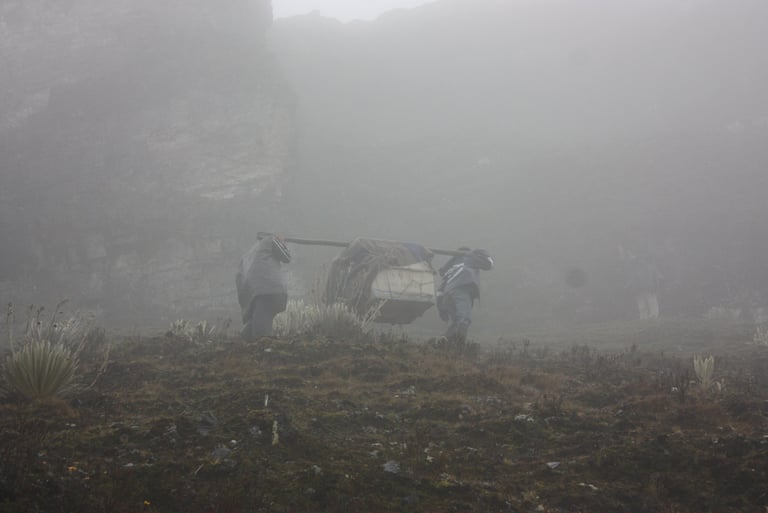
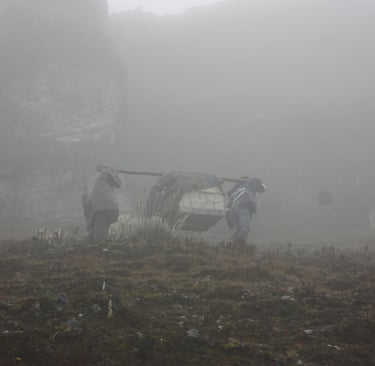
It was a cold, rainy day in 2013 on the slopes of the Ritacuá Snow-Capped Peaks, deep inside El Cocuy National Natural Park. Orlando and his colleague Mauricio Rojas, together with the park's team, found shelter between rocks to shield the bird from the harsh weather while they prepared everything.
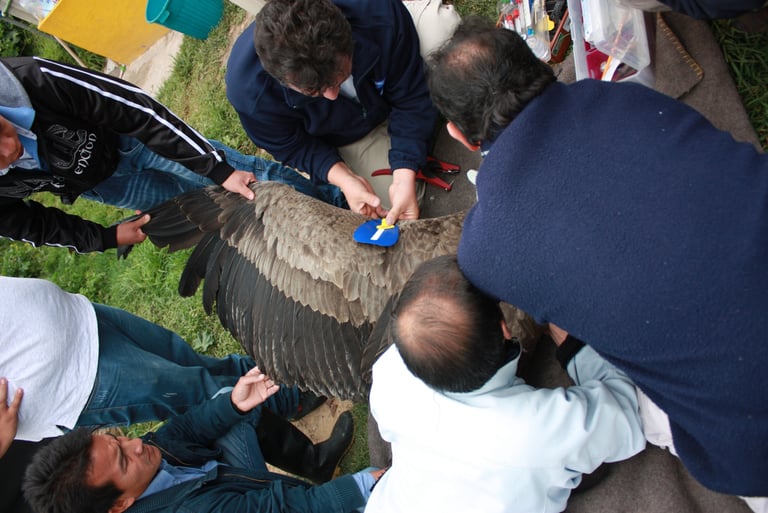
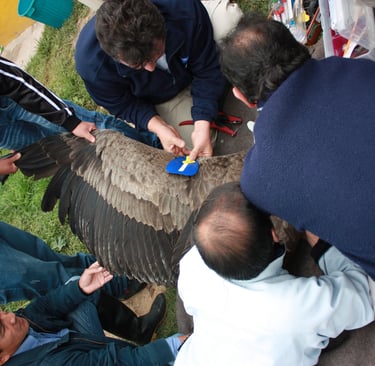
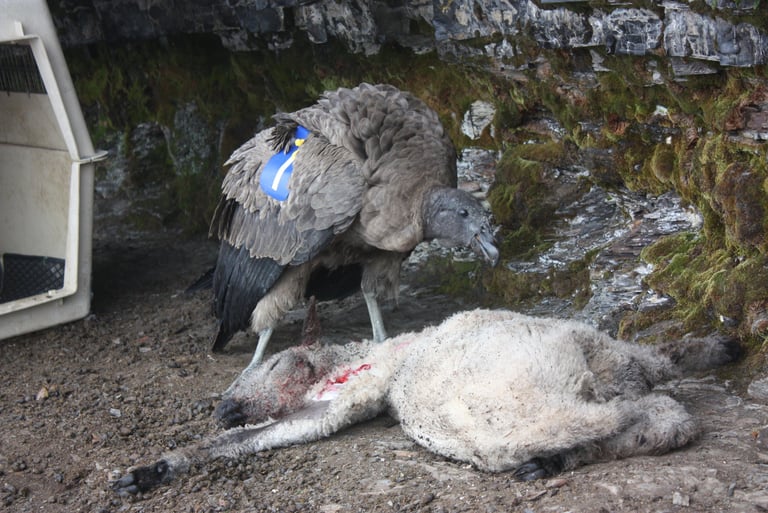
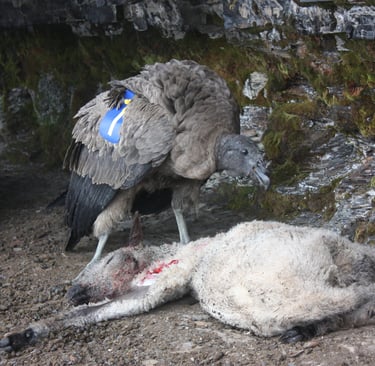
Before the release, the team marked the condor's wing with a blue wing tag, number 1 — a decision that seemed purely technical at the time, but one that years later would become the key to the entire story. The number 1 was not just a code: it meant the bird was wild-born, and that she was the first condor ever released in this process. A sheep was left as a food source to ease her transition into the wild.
That day, due to the weather conditions, no one saw the condor take flight. The team left without knowing exactly when she would open her wings. But the Andes were waiting for her.
Thirteen Years of Silence
Between 2013 and recent years, the trail of Condor Number 1 faded into mist and mountain range. That is how nature works — released animals don't send signals, they simply live.
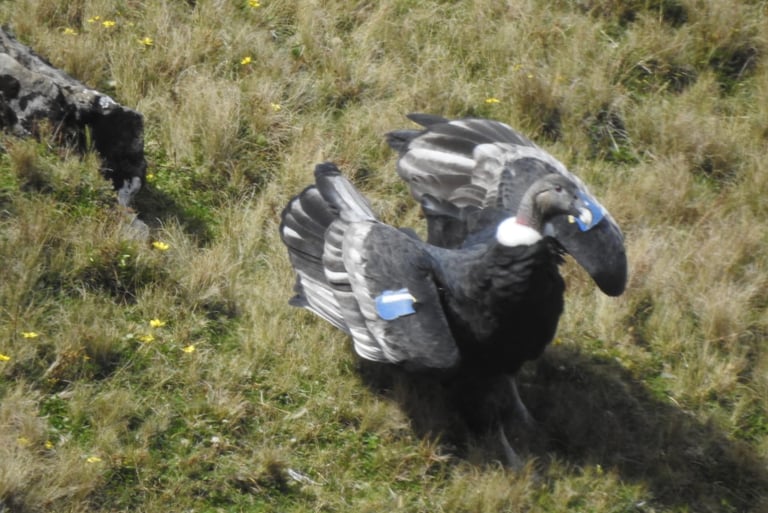
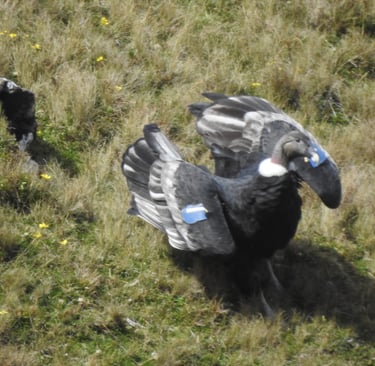
The confirmation came in the most unexpected way. During monitoring work carried out in partnership with Parque Jaime Duque and its condor conservation program, Carlos Suarez one of the observers spotted a condor flying in the Laguna de los Ortices area in Santander — and something caught their eye: the mark on the wing. They mentioned it almost in passing. It was then that Orlando, upon hearing it, recognized what that blue number meant.
It was her. The same condor from El Cocuy. Now an adult, regularly soaring over the páramos of Santander, fully integrated into wild life.
Why This Matters
The Andean condor is classified as Vulnerable on the IUCN Red List. In Colombia, every individual that manages to recover, be released, and survive more than a decade in the wild represents an enormous triumph for the species.
The story of this condor — found on the ground in Carcasí, rehabilitated in Chingaza, released in El Cocuy with the number 1 on her wing, and spotted decades later soaring over Santander — is proof that conservation works when people dedicate their lives to it.
El Paramo as a Starting Point
Behind this story is El Páramo Natural Reserve, in Guasca, Cundinamarca. Since 1989, Orlando Feliciano has worked with endangered species across the Colombian Andes. Decades of fieldwork that today shape a reserve where every trail has a story like this one behind it.
If this story moved you, we invite you to visit El Páramo — where conservation is not a concept, it is a way of life.
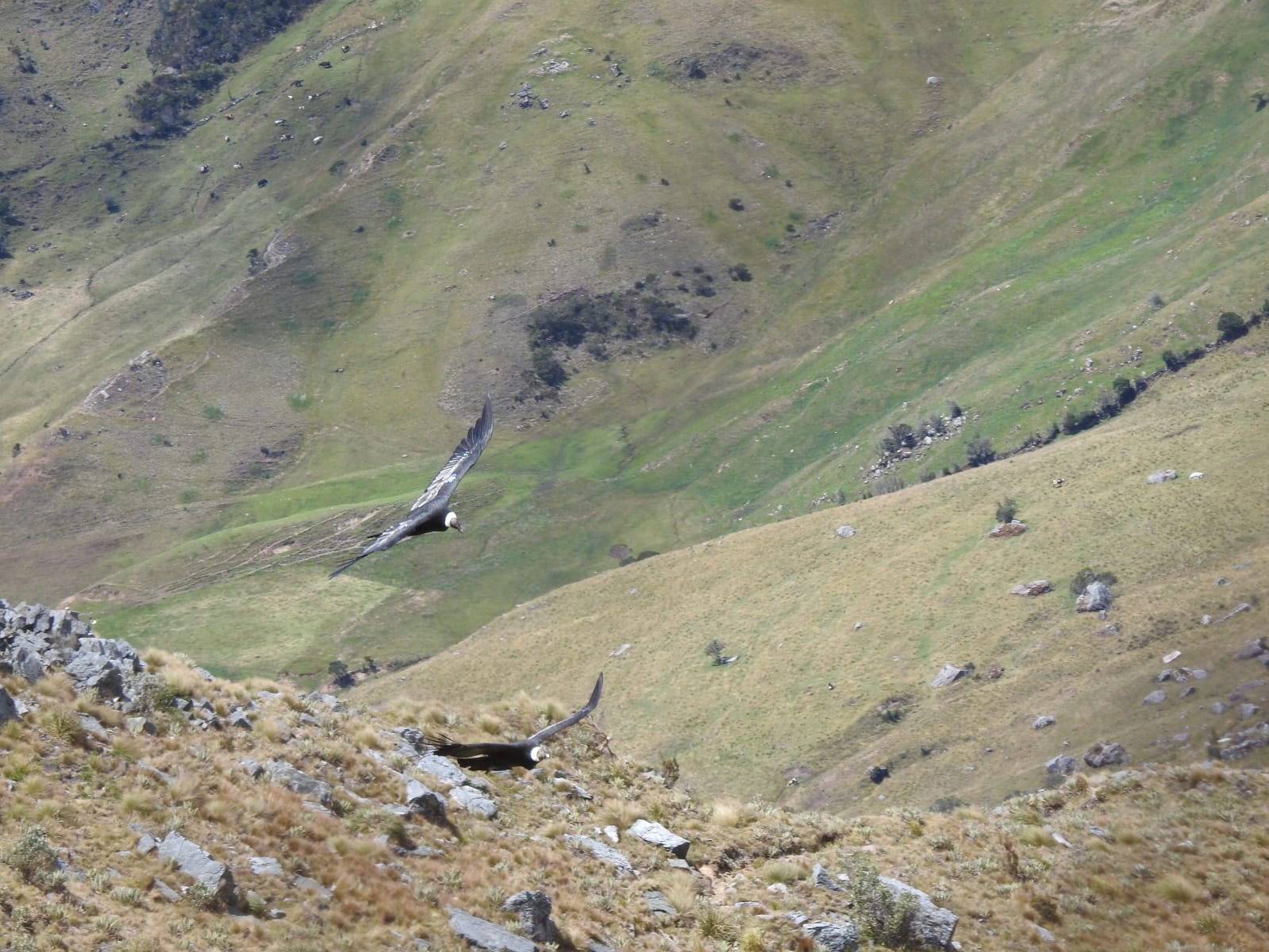
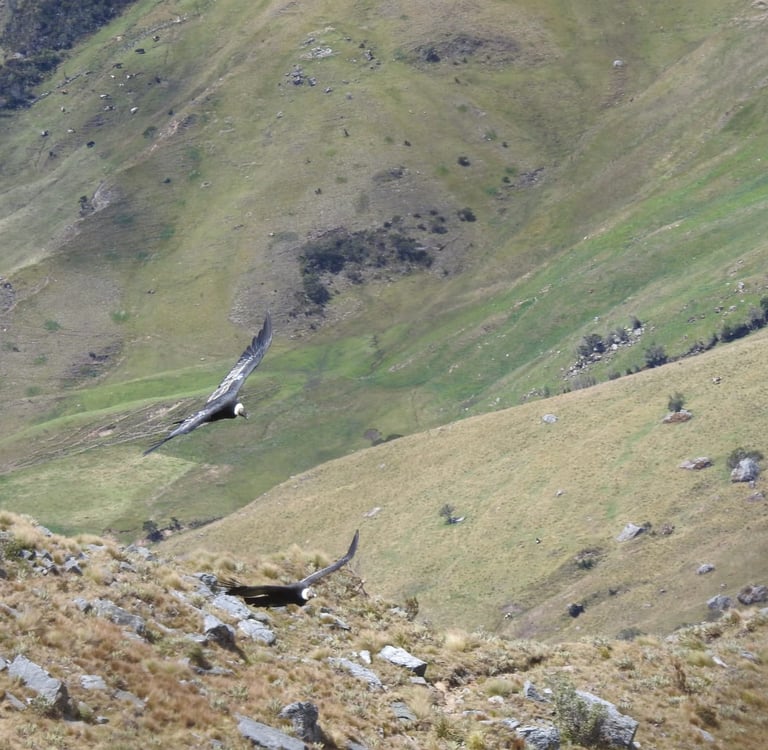
Two Andean Condors (Vultur gryphus) in flight over a vast green and rocky mountain valley, Laguna de los Ortices, Santander. Photo by: Carlos Suarez.
Orlando Feliciano fitting a blue wing tag on an Andean Condor (Vultur gryphus), Cocuy, 2013. Photo by: Orlando Feliciano.
Andean Condor (Vultur gryphus) release day at Cerros Nevados Ritacuba, Cocuy, Colombia. Photo by: Orlando Feliciano.
Andean Condor (Vultur gryphus) by the rocks prior to its initial release, El Cocuy PNN, 2013. Photo by: Orlando Feliciano.
Adult Andean Condor (Vultur gryphus) with ID wing tags. Resighting 13 years post-release. Páramo, 2026. Photo by: Carlos Suarez.
Some stories in wildlife conservation are never planned — they simply happen, and when they do, they change everything. Not long ago, a piece of news arrived from the Laguna de los Ortices area in Santander that had taken more than a decade to travel: the Andean condor that Orlando Feliciano released in 2013 on the slopes of the Ritacuba Snow-Capped Peaks had been spotted. Alive, free and soaring over the Colombian Andes in the company of black vultures.
Address
Q6HF+55, Guasca, Cundinamarca
GPS Coordinates
4.778049761249889, -73.7770946864846
Contact
(+57) 316 6827386
hello@paramoreserve.com